
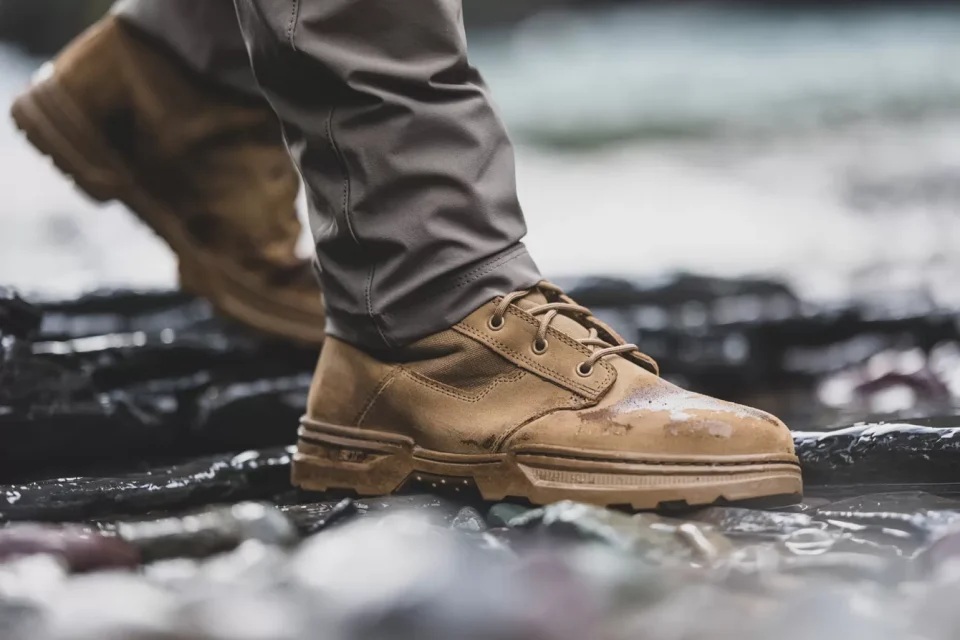
Wet ground, heavy rain, muddy paths, and long outdoor shifts can quickly make unsuitable footwear uncomfortable. Waterproof tactical boots are designed for people who need dependable coverage, ankle support, traction, and a professional appearance while working in changing weather and demanding environments.
What Makes Tactical Boots Waterproof?
A tactical boot may use several construction methods to reduce water entry. Some models include an internal waterproof membrane placed between the outer material and the lining. Others rely on treated leather, sealed seams, gusseted tongues, or combinations of these features.
The waterproof layer should help keep rain, shallow puddles, and wet vegetation from reaching the foot during normal use. However, waterproof does not mean that a boot can remain submerged indefinitely. Water may still enter over the top, through damaged seams, or when the waterproof lining has worn down.
Product descriptions should clearly state whether the footwear is waterproof or simply water resistant. Water-resistant boots may handle light rain or brief exposure, but they are not necessarily designed for extended use in wet conditions.
Who Uses Waterproof Tactical Boots?
Tactical footwear is commonly worn by law enforcement officers, security personnel, military members, emergency responders, corrections staff, and workers who regularly move between indoor and outdoor areas.
They may also suit:
- Utility and maintenance workers
- Outdoor event staff
- Delivery drivers
- Hikers and campers
- Search and rescue personnel
- Range officers
- Workers at construction or industrial sites
Each role creates different footwear demands. Someone standing on pavement for most of the day may value cushioning and reduced weight, while a worker crossing wet soil may need deeper tread and stronger ankle support.
Employers may also set rules for colour, height, toe protection, sole type, or polishable materials. These requirements should be checked before purchasing.
Waterproofing and Breathability
Keeping outside moisture away from the foot is only one part of comfort. Feet also produce heat and perspiration, particularly during long shifts or physical activity.
A waterproof membrane can limit water entry while allowing some internal moisture to escape, but breathability varies between materials and designs. Heavily insulated or fully sealed boots may feel warm during hot weather.
Moisture-managing linings and suitable socks can help reduce dampness inside the boot. Synthetic or wool-blend socks usually manage sweat more effectively than cotton, which tends to hold moisture against the skin.
Anyone working across different seasons may need more than one pair of boots. A waterproof model can be useful during rain and colder months, while a lighter, more ventilated pair may feel better in dry summer conditions.
Fit, Width, and Ankle Support
Correct sizing is essential because tactical boots are often worn for many hours at a time. The heel should remain secure without excessive lifting, while the toes need enough space to move naturally.
A boot that feels tight across the forefoot may require a wider size rather than additional length. Buyers should look for width choices when standard sizing causes pressure or pinching.
Ankle support should feel stable without preventing natural movement. Taller boots may offer more coverage around the ankle and lower leg, but they can also feel heavier or less flexible.
Try boots with the socks normally worn at work. Orthotic users should check whether the footbed can be removed and whether the boot has enough internal depth for the insert.
It is also sensible to test the fit later in the day, when feet may be slightly larger after hours of standing or walking.
Traction and Outsole Design
Waterproofing alone does not make a boot suitable for wet conditions. The outsole must also provide grip on the surfaces encountered during work.
Deep, widely spaced lugs can help release mud and provide traction on loose ground. Shallower tread patterns may feel more comfortable on pavement and indoor flooring.
People working around wet concrete, tile, metal steps, ladders, or vehicle surfaces should look for footwear described as slip resistant. A rugged-looking tread does not automatically mean that the outsole has been tested for workplace slip resistance.
The outsole should also flex in the right area. Boots that are too stiff can increase fatigue, while soles that are too soft may not provide enough stability on uneven terrain.
Oil resistance, abrasion resistance, and heat resistance may matter in certain workplaces. These qualities should be confirmed through the manufacturer’s specifications rather than assumed from appearance.
Other Features to Compare
Tactical boots are available with a wide range of practical features. Side zips allow the wearer to put on and remove boots quickly, while laces still provide adjustment across the foot and ankle.
A gusseted tongue can help keep water, dirt, and debris from entering around the laces. Reinforced toe and heel areas may reduce wear in positions that involve kneeling, climbing, or driving.
Some jobs require composite or steel safety toes. Protective-toe boots should meet the standards required by the workplace. A safety toe can add weight and may affect fit, so adequate toe room is especially important.
Other features worth reviewing include:
- Padded collars
- Shock-absorbing midsoles
- Removable footbeds
- Non-metallic construction
- Polishable toe sections
- Reinforced stitching
- Lightweight upper materials
- Rust-resistant hardware
The right combination depends on the environment, expected shift length, weather, and uniform policy.
Caring for Waterproof Tactical Boots
Regular cleaning helps waterproof materials work as intended. Remove mud and dirt with a soft brush, then wipe the boots using methods suitable for the upper material.
Wet footwear should dry naturally in a ventilated area. Direct heat from radiators, heaters, or dryers may damage leather, adhesives, and waterproof membranes. Removing the insoles and loosening the laces can help air circulate.
Leather boots may need periodic conditioning, but the chosen product should be compatible with waterproof footwear. Some oils and waxes can change the appearance or breathability of the leather.
Inspect the seams, sole edges, tongue, and upper regularly. Cracks, separation, or worn linings may allow water to enter even when the outer surface still looks serviceable.
Alternating between pairs gives each boot more time to dry fully between shifts, which may help reduce odour and material breakdown.
The right tactical boot should match the wearer’s job, climate, surface conditions, and fit requirements rather than relying on appearance alone. Visit BootsPlusMore to compare tactical and military footwear, waterproof designs, available widths, outsole features, and work-ready options.